
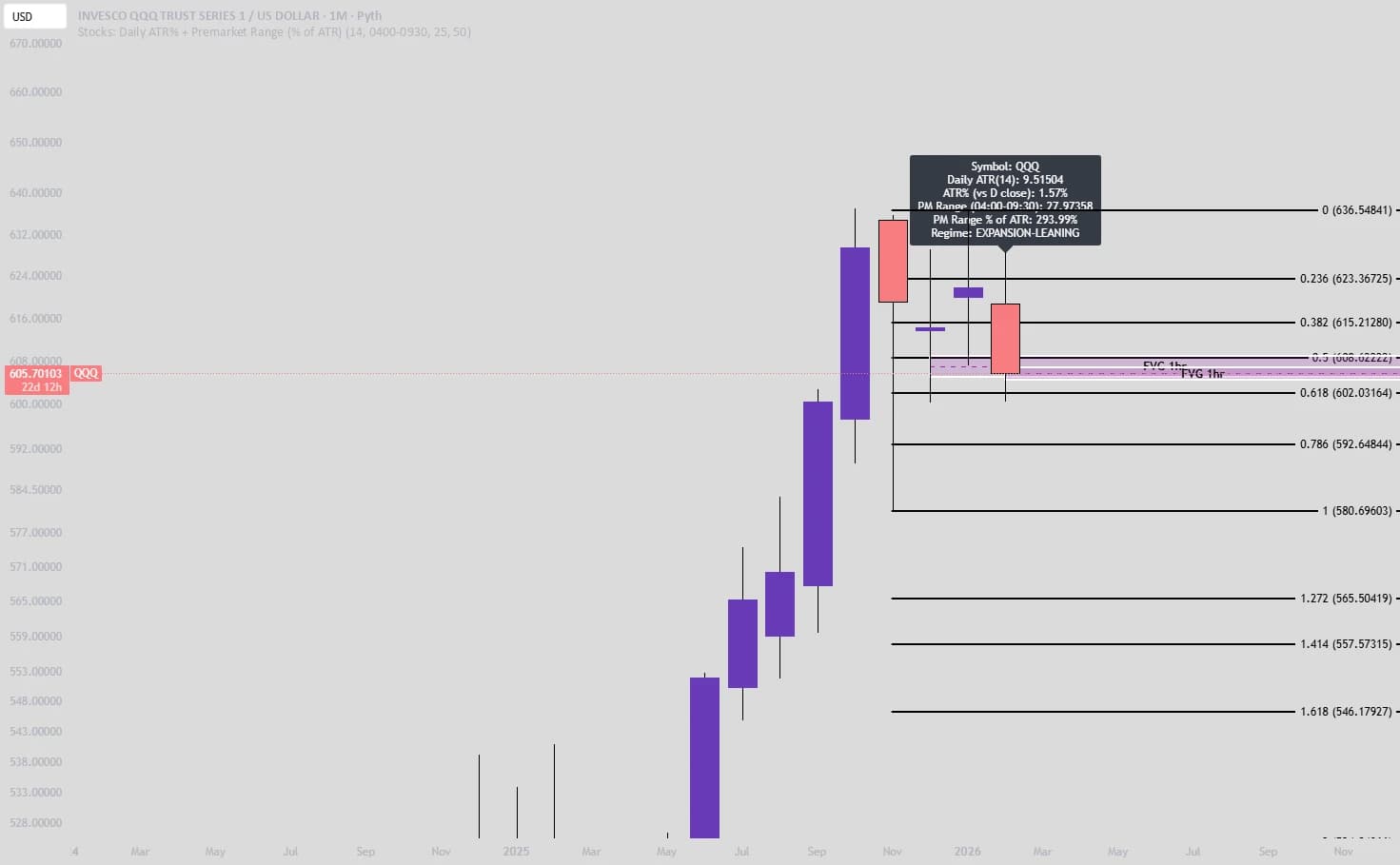
What the opening range is
The opening range is the high and low printed in a chosen window right after the cash open. Many U.S. day traders use the first 15 minutes, 9:30 to 9:45 AM Eastern, because that window often captures the first burst of orders after the overnight gap has already printed.
Those two prices become the session’s first reference levels. Everything that happens later can be judged against them: did price accept above the high, fail back into the range, or never leave it with real volume?
An opening range breakout is a move through that high or low with enough participation to matter. A single tick beyond the level is not the same thing as acceptance. The range is structure. The break is a claim that needs confirmation.
Why the first minutes matter
The open concentrates unfinished business from the overnight session, news reaction, and resting orders. That is why the opening range can feel “important” even when it later fails. Traders are not predicting the whole day from fifteen minutes. They are marking where the first tug-of-war settled.
If the broader market is one-sided, many individual names will lean the same way. If the tape is mixed, opening-range breaks fail more often. The range does not replace a read of SPY, QQQ, or the sector leaders. It gives you levels inside that context.
Green Horizon treats the opening range as a planning tool for the morning session, not as a guarantee that the first break will trend. The educational playbook — exact entries, re-entry, stops, and targets — lives in Premium. This page stays on the public idea and the process around it.
How traders use the range without forcing a trade
A workable public process looks like this: define the window before the open, mark the high and low when the window closes, then wait. Do not invent a trade during the forming range just because the clock is moving.
After the range is set, traders look for a break and then for confirmation from relative volume, VWAP, a short moving average, or the behavior of related names. Confirmation is a filter. It is not a promise. Many early breaks reverse when volume was only a headline spike.
Failed breaks matter as much as clean ones. A push through the high that stalls and falls back into the range often tells you the auction rejected that side. Chasing the first print through the level, ignoring volume, or fighting a strong sector bias are common ways to turn structure into a loss.
If your scanner highlights a name that is breaking its opening range, treat that as a candidate alert. The next step is still your plan: Is this on your watchlist? Is the risk defined? Does the tape match the idea you prepared? Scanners find candidates. They do not take the trade for you.
What usually goes wrong
The most expensive habit is treating the first break as mandatory. Some mornings the best decision after the range prints is to wait for a second attempt, a reclaim, or a different name entirely.
Another mistake is ignoring the quality of the move. Wide spreads, thin floats, and one-sided news can make a break look clean on a chart while fills are poor in real time. Process has to include “can I actually trade this?” not only “did it cross the line?”
Traders also mix frameworks. The opening range is not the same thing as a multi-day breakout, a premarket high break, or a VWAP reclaim. Those ideas can appear on the same chart. They are still different questions. Mixing them mid-trade is how plans become improvisation.
Finally, people skip the review. If you do not write down whether the break held, failed, or never deserved size, the next open will feel new every time. A short journal note after the session is part of using the range, not an optional extra.
How this fits Green Horizon
On this site, the opening range is taught in layers. This free page covers the definition, the process, and the failure modes. Premium’s Opening Range Breakout lesson holds the member rule set. Tools pages explain which scanners can surface related candidates; they are not a substitute for the lesson.
If you are building a morning process, pair this page with Creating a Watchlist and Trading Routine Tips. Mark levels the night before when you can. Refine them after the open. Leave the exact Premium checklist for members who want the full playbook.
Where to go next
Read Creating a Watchlist for how to prepare names before the open, and Trading Routine Tips for the before / during / after loop. Browse Tools if you want to see which scanners Green Horizon offers. Use Premium’s Opening Range Breakout lesson when you want the full educational rule set — entries, management, and risk as taught there.